The approach
The whole hour is the treatment.
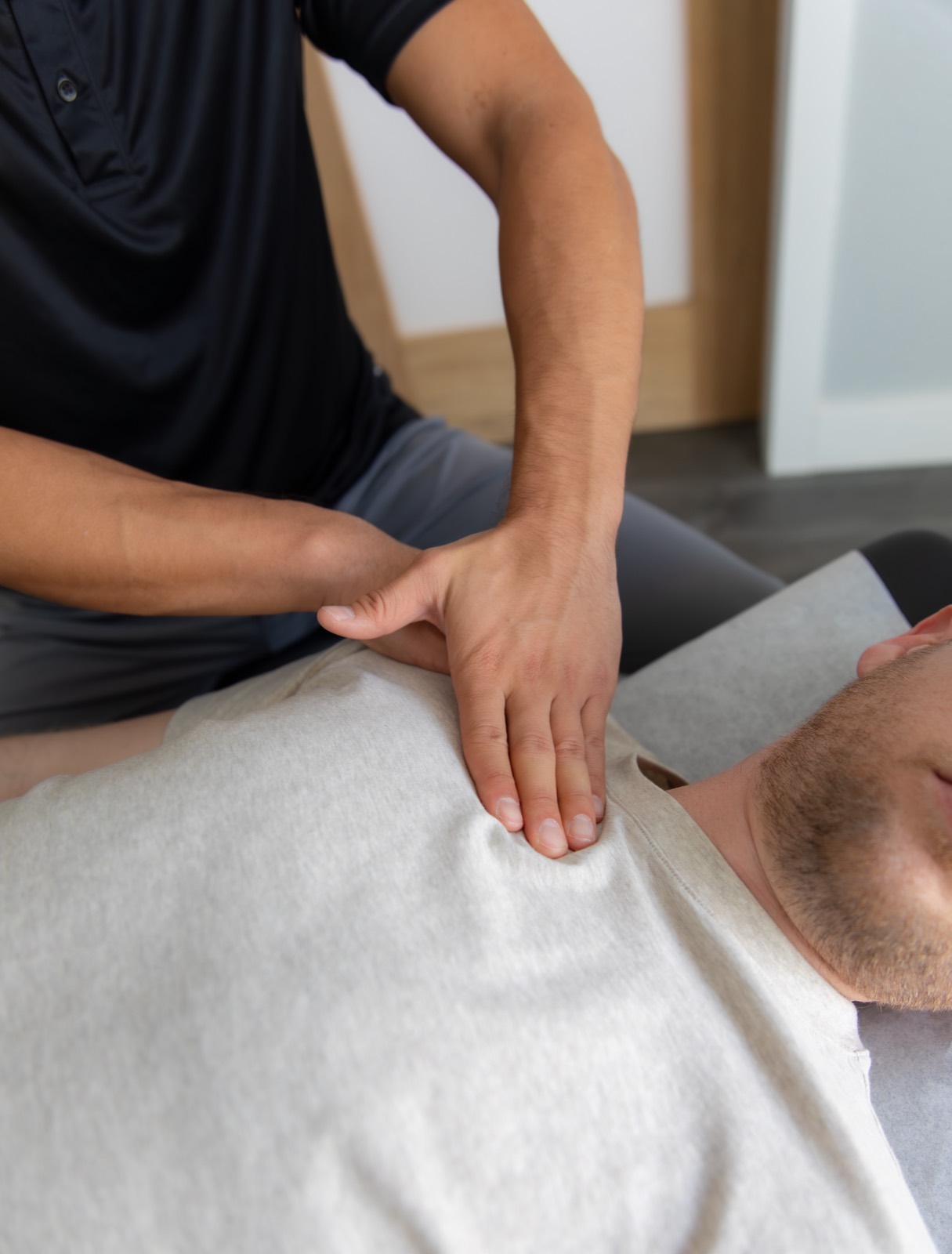
Sessions at G3 Chiro in Newport Beach run 45 minutes or longer, with 90 minute sessions when a problem calls for it. Nothing about that is padding. It is the amount of time it takes to assess how the joints, muscles, fascia and movement patterns are working together, treat what the assessment finds, and teach you what to do between visits. One patient at a time, never a room of them.
45 MIN · 90 MIN AVAILABLE · ONE PATIENT AT A TIME
- 1000+
- Patients helped
- 100+
- Advanced trainings
- 45-90
- Minutes per session
- 1
- Patient at a time
Hands-on work and exercise, in the same visit. Not one or the other.
Hands-on treatment changes what the tissue and the joint can do. Exercise is what teaches your body to keep it. Delivered separately, the first fades and the second has nothing to build on, which is why so many people cycle between two providers for years without either one resolving it.
Every session here combines both, and you leave with exercises built for what the assessment actually found rather than a printed handout. The aim is not to keep you on the schedule. It is a defined plan, measurable progress, and a clear finish.
In their own words
Three people who had already done the rounds.
Back pain, over ten years
I've been dealing with back pain a little over ten years. I've seen a lot of chiros. I found myself in a cycle where I'm kind of back to where I started. When you get detail-oriented the way you do, you really get in there and address where the areas of tightness and pain are. I know it's not gonna be a one-time deal.
Pedro
Shared with permission. One person’s experience. Results vary from person to person, and no outcome is promised.
Foot pain after surgery
I've had foot surgery, and right after that I noticed it was very stiff and it was even more painful to walk. The thing that was really bothering me about my foot, he was able to fix it, and those exercises helped me maintain that pain-free foot. I'm able to walk again more comfortably.
Lisa Au
Shared with permission. One person’s experience. Results vary from person to person, and no outcome is promised.
Foot and ankle, after four years of rehab
I did four years of rehab, four years of exercising, and I couldn't get any further. I was walking, but I was walking more flat-footed, and now I can walk on the ball of my feet. I can rotate my feet side to side, which I could not do before. Overall my gait is better.
Kim
Shared with permission. One person’s experience. Results vary from person to person, and no outcome is promised. Individual recovery from a long-standing foot and ankle problem varies widely.
Methods
What he may use, and what each one is for.
Restoring motion to a stiff joint without a traditional adjustment
Osteo-articular joint pumping
A precise hands-on technique that works the joint through its range rather than thrusting through it. This is the reason nobody has to be adjusted here.
Releasing the connective tissue wrapped around muscles and nerves
Fascial normalization
Restrictions in fascia can keep a muscle tight or a nerve irritated no matter how much you stretch. This addresses the tissue itself.
Freeing tight muscle and trapped nerves
Active Release Technique (ART)
Hands-on soft tissue work aimed at adhesions and nerve entrapments. Dr. Jaron is certified to Level 2 plus Fascia.
Specific postures that create space in the spine
ELDOA
An exercise system of precise positions designed to decompress a targeted spinal segment. You do these on your own between visits, which is how the work holds.
Corrective exercise built for your body, not a handout
SomaTraining
Individualized movement retraining that rebuilds the capacity to hold the change rather than returning to what caused the problem.
Restoring mobility around the organs
Visceral normalization
The organs sit in connective tissue that connects to the spine and ribs. When that tissue restricts, it can show up as back pain that will not resolve.
Gentle work at the head and tailbone
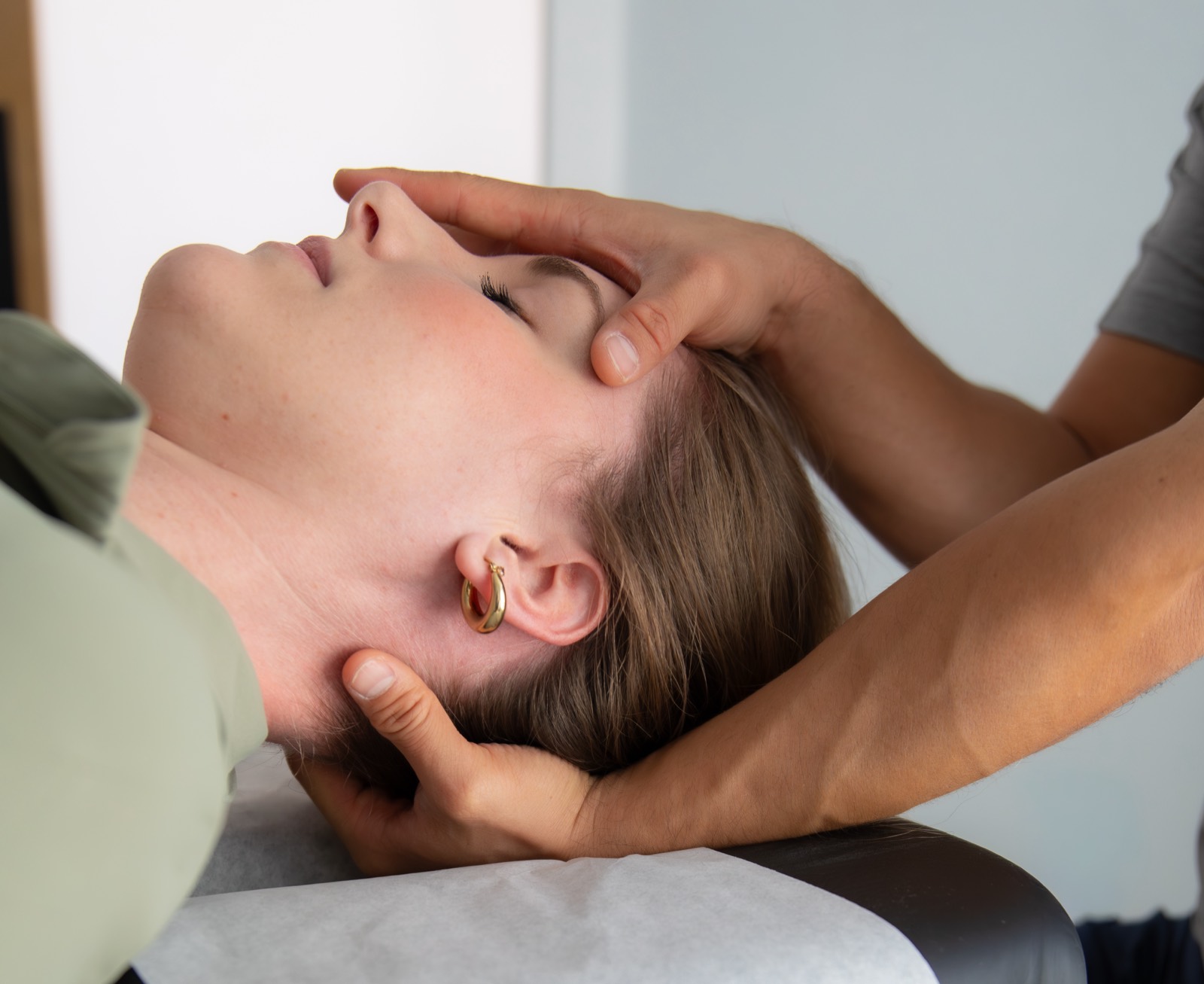
Cranial-sacral therapy
A light hands-on method working with the bones, membranes and fluid around the brain and spinal cord.
A movement screen that finds where the weak link is
SFMA
Selective Functional Movement Assessment, used to work out which part of a movement chain is failing before anything gets treated.
Not ready to book? Request a call